

I remember sitting in my grandparents’ house in rural Tennessee decades ago listening to my grandmother and father arguing about whether the moon landing was real. The argument was jovial, if animated, from what I remember. My grandmother and father, long antagonists, eventually reached a status of mutually respectful if occasionally tense debate partners, even while my grandmother loathed the heathenism my mother had married into.
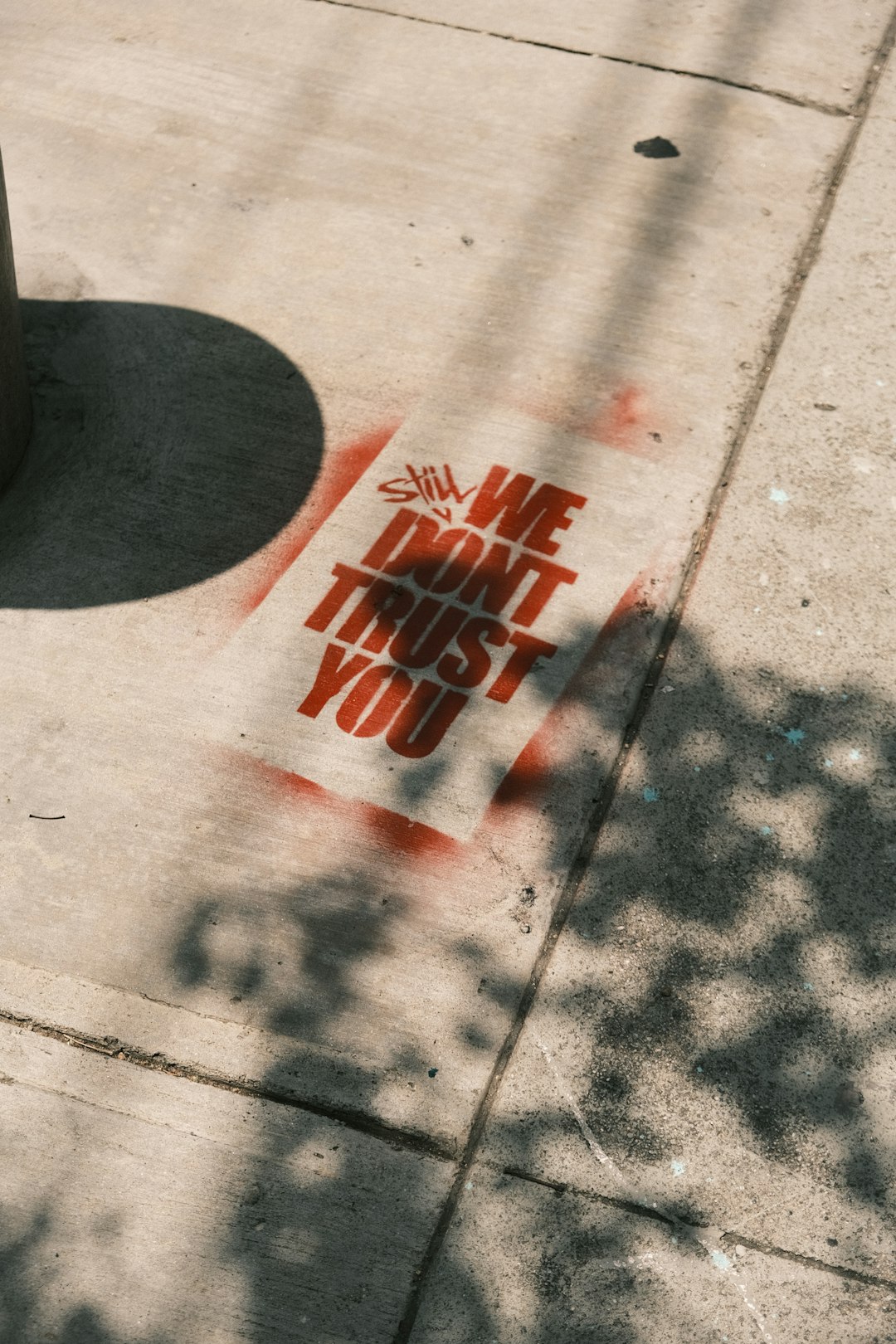
If you think "trust the experts" is a straw man nobody actually deploys, it was a busy year. When the Trump administration dismissed the CDC's vaccine advisory panel last June, the governors of California, Oregon, and Washington responded that their states "depend on the best science and knowledge available." By September Newsom was signing a law to break from future federal vaccine guidance altogether, pledging to put "science, safety, and transparency first." In January he called the administration's revised childhood vaccine schedule a move that "flies in the face of decades of medical expertise." Meanwhile, at the Make America Healthy Again summit in November, Vice President Vance told RFK Jr. that "all the experts were wrong" and that the administration needed to be "comfortable challenging some of these old orthodoxies." Both sides are taking a one-dimensional view. One collapses all expertise into a single authority you either accept or reject. The other collapses all expert skepticism into ignorance. Neither is doing what my grandmother ultimately did, which was trust but verify in four dimensions.
Last time I asked readers to think about the phrase “I believe in science” with a little more complexity, because all knowledge is contextual and incomplete: a snapshot that will look partial from a hundred years out. This time I’m asking you to do the same thing for the related claim, “trust the experts.” That saying asks you to treat a snapshot as the whole landscape, and it strips out the humility that would make an expert worth trusting in the first place. It’s also incredibly damaging to our public discourse over the long-run.
Trust needs to be earned
I don’t remember precisely what my grandmother’s argument was, but knowing her my guess is that she was probably agnostic on the moon landing itself. Her point was likely a broader one based in distrust of government. If she refuted the photographic evidence it wasn’t because she truly believed it false, but that she “wouldn’t put it past them.”
My grandmother was the youngest of eight children whose father died when she was seven, plunging the family into poverty. She spent the next ten years suffering from malnutrition and subject to her mother’s ire. Despite a very difficult adolescence, she was a woman of striking intelligence and intellectual curiosity, the only one of her siblings to graduate high school. In the rural Tennessee town they eventually retired to she was called to give guest sermons at various basement evangelical churches based on her almost photographic memory of the Bible and her powerful analyses. Her financial acumen took her from lower-class to comfortably upper middle class across her lifetime, carefully investing my grandfather’s blue collar earnings in the stock market while her more skittish siblings continued to invest solely in government bonds.
My grandmother denied the moon landing not because she was ignorant or stupid but because in her experience of the world experts had done little to earn her trust. Almost everything in her life had been fought for, concretely and in the moment and by her. Academics, lawyers, government bureaucrats and physicians had done little for her and she knew it. If she vaccinated her kids it was because she had firsthand experience that vaccines worked; she was suspicious of the moon landing because she hadn’t seen it with her own eyes. She had, undoubtedly, benefited from invisible experts over her lifetime as public health and medical expertise grew and she herself trusted medical experts when it seemed prudent to do so.
But that qualification did a lot of work.
She grew up in a world where she had to figure things out on her own and she took verification very (very) seriously. God and the church showed up for her. Government and experts, not so much. And for whatever it’s worth, she subjected church leaders to the same verification model and found they often failed too. She was nothing if not consistent. It’s also true that as a woman of faith, experts had not treated her beliefs with much respect, let alone deference.
As my grandmother cynically understood, experts of all kinds are human. Experts respond to incentives, and not all incentives point toward your wellbeing. My grandmother was viciously critical of failures of church leaders, politicians and public health officials alike. In the end, she knew that she was ultimately responsible for the choices she made about her own life and she made those choices, taking advice from experts when it seemed to make sense and ignoring it when it didn’t.
She died of lymphoma, likely exacerbated by an avoidable medical error, when I was in grad school. Against medical advice (and the pleading of my grandfather), she chose to cease the radiation and chemotherapy that were ravaging her body, arguing that she knew she was going to meet Jesus and she might as well do it sooner rather than later. She knew what her doctors refused to say: she was dying, her body riddled with tumors, whether she liked it or not, and she saw no reason to beat around the bush. Two weeks before her death she was puttering around their farm making chicken soup from scratch for my grandfather and she died at home in her living room rather than in an ICU. Her decisions to buck the experts at the end of her life were, on most measures, the correct ones.
She also happened to be wrong about the moon landing. If her method was generally sound, her conclusion was false, which happens to everyone at least some of the time. But it was false not because she was ignorant or stupid. It was that verification is expensive and nobody had ever given her a reason to spend those scarce resources on NASA. Being right on concrete issues and wrong on the abstract is probably a pretty good pattern of error for the average person, for what it’s worth. But the gap between method and conclusion is most of what this post is about, so let’s dig in.
Experts are human
Most doctors are conscientious and care about their patients. But there are a range of incentives in medical practice that cut against patient wellbeing. My grandmother knew this and took it at face value. She trusted but verified.
At one extreme, there are bad faith actors. Every profession has its psychopaths, because that’s just how humans work. There are psychopathic doctors, psychopathic nurses, psychopathic professors. Wondery’s Dr. Death is a great deep dive into the failure of expertise, where every single sociopath had both top-notch medical credentials and standing. “He’s a doctor” was, for a long time, treated as a full character reference.
It isn’t one.
But you don’t need bad actors for the system to fail. Sometimes you just need people to trust expertise over evidence. For decades, bite-mark testimony helped convict people, often in sexual assaults and murders, delivered by a small number of credentialed experts the courts treated as authoritative. It took the field years to run the blind tests it should have run at the start, and when a board of bite-mark examiners finally ran one, they couldn’t reliably agree on whether the marks were even human. Thirty-eight board-certified forensic dentists looked at a hundred photographs, and on only fourteen of them could even eighty percent of the examiners agree on the basic questions. Bite-mark matching is about the junkiest junk science there is. Not fraud, necessarily, but confident expertise that no one had ever verified, with real human lives on the line. People went to prison on made-up evidence delivered by people with all the right letters after their names.
And bite marks aren’t the outlier. In 2009 Congress asked the National Academy of Sciences to evaluate American forensic science, and the answer came back that with the sole exception of nuclear DNA analysis, no forensic method had ever been rigorously shown to reliably connect evidence to a particular person. Not hair comparison, footwear, or even ballistics, which had claimed near-perfect accuracy for decades on the strength of exactly one study. When the FBI audited its own hair examiners, it found erroneous testimony in 96% of the trials it reviewed, from 26 of the 28 analysts involved. Thirty-five of those defendants had been sentenced to death. Nine have been executed.
Some dental forensics is perfectly sound: matching dental records to identify remains, for instance. The problem was never the whole field. It was a specific claim nobody had bothered to test that was protected by the aura of expertise. That’s the (in this case catastrophically dangerous) failure a blanket “trust the experts” produces.
Trust, but verify
Where I land is not “distrust everyone.”
Do I want to trust experts when they are trustworthy? Absolutely. The trouble is that I can never know for certain, in advance, who is trustworthy. So the best I can do is treat it as a probability. I can do some research. Extend trust based on what I find. And keep verifying as I go.
My family has a wonderful family-practice doctor. When we first joined her practice, I checked her credentials. I have five years of experience with her now. When she tells me one of my kids has an ear infection and writes a prescription, I do not launch an investigation. I go get the antibiotics (though if you don’t know the doctor you should ask questions, since 84% of ear infections resolve without antibiotics and more than 95% of children get prescribed them anyway). That is a low-stakes decision inside an iterative relationship where she has earned trust over time, and spending my skepticism there would be irrational. But if it were a high-stakes call, I would ask for a second opinion, and this is the critical part: my doctor would say yes immediately. Her response to a request for a second opinion would be, “Absolutely, let me refer you to a couple of specialists, and if they disagree with me I want to know, because it makes me a better doctor.” The willingness to be checked is itself one of the best signals of trustworthiness there is.
That’s the whole disposition. Trust, but verify, even (or maybe especially) yourself. It takes the radically moderate virtue of humility and applies it to everyone, equally. It’s how I treat elected officials, and I don’t see why the people diagnosing my kids or testifying at a murder trial should be exempt from a standard I apply to a city council member. For most of us that verification doesn’t mean re-running the science ourselves. It means checking the checkers: the credentials, the track record, and whether the claim has survived people trying to knock it down.
Verification as insult
There’s a longer-term danger to the “trust the experts” sloganeering that I heard during COVID and increasingly again now that various scientific fields are under politicized attack. The slogans do real damage because “trust the experts” has trained too many disciplines to treat any question as an attack. Push back on a diagnosis and you’re a difficult patient. Question a consensus and you’re a conspiracy theorist.
Surgery is a great example because the resistance there had nothing to do with politics. Checklists in medicine got fought for years on the grounds that they were insulting, that they were a nurse’s tool, and that a trained physician did not need a piece of paper to tell him his job. Then the WHO ran the numbers on a nineteen-item surgical safety checklist across eight hospitals and found that deaths fell from 1.5% to 0.8% and complications from 11% to 7%. Ironically, the very experts who insisted they didn’t need to use checklists wanted other experts to use them: 93.4% of the operating-room clinicians said they would want the checklist used if they were the one having the operation. We know verification works. We would just prefer to be on the other end of it.
The counter-example is eyewitness identification (and one where I’ve been wrong before and am glad to be corrected). For thirty years the research consensus was that eyewitnesses, and especially confident eyewitnesses, could not be trusted. Then researchers looked harder and found that the problem was mostly the procedures: non-blind administrators, suggestive lineups, confidence recorded after the witness had already been told she did well. Clean up the procedure and a confident identification turns out to be accurate around 97% of the time, in the field as well as the lab. And then last August another group ran the numbers and said no, that estimate is too generous and here’s why. And they’re still arguing about it.
That’s what a field looks like when verification is working and where the scientific method trumps bare credentialing.
The same dynamic shows up even worse in politically charged spaces. The New York Times spent a year reporting on the University of Michigan’s DEI program and found that after a decade and a quarter of a billion dollars, students and faculty reported being more frustrated and more divided, not less. Many DEI “experts” offered expensive expertise and trainings that were useless at best and made racial animosity worse rather than better at worst. (Musa al-Gharbi’s analysis here is still one of the most comprehensive I’ve seen).
Because experts are often granted status simply for being experts, they don’t enjoy being questioned. And because humans are primed to respect status, particularly within our tribe, we often don’t question expertise at all. We’ve built a culture where the reasonable act, “trust, but verify”, gets coded as hostility, and the expert is incentivized to resist exactly the verification that would make the whole system stronger.
I can think of two fixes, but both are hard to pull off.
The first is cultural and it’s on us. Retire “trust the experts.” Retire “I believe in science.” Replace them with something closer to how knowledge actually works: this claim has been vetted, this person has the chops they say they have, and here is how I checked, with the caveat that the information might change and all knowledge is incomplete.
The second is on the experts, and it’s structural. We have to build in the expectation that expertise should be asked to justify itself, and train experts to feel that as normal rather than as a personal wound. It’s not an insult to ask a doctor why she’s recommending this procedure (or even if they’re operating on the right body part). It’s not an insult to ask a forensic analyst to defend a method under blind conditions (in fact, justice demands it). Having your expertise questioned should be a standard part of becoming an expert, in medicine, in law, and in science. That means we need to build in more of the machinery that actually catches error: adversarial collaboration, rigorous blind testing before we let something count as evidence in a courtroom, and real verification mechanisms for the experts themselves (maybe more emphasis on standardized exams and less on prestige-based degrees). Blind review is what finally caught the bite-mark people. We shouldn’t have needed a generation of wrongful convictions to run it.
Shaming feeds error
“Trust the experts” has deeply damaging political effects too. When you treat people like idiots, they stop listening to you about everything else, too. I watched this happen in real time during COVID. I was not a denier of anything. My kids were masked, and they were among the first children vaccinated. But the way vaccine skeptics and people with ordinary, good-faith questions got treated - as morons, as enemies, and as a problem to be managed rather than people to be persuaded - did lasting damage to public trust and to the scientific community’s own ability to do its job. Treat people like idiots and they’ll ignore you the next time, even when you’re right.
The raw milk debate is maybe the most recent example. There’s solid evidence that pasteurization is a very good thing. My kids drink pasteurized milk, for whatever it’s worth. But you cannot get from “this person is wrong about raw milk” to “therefore they should shut up and defer to the medical establishment on everything forever.” That’s not how humans work. The more we mock and shame people for their suspicions about official scientific claims, the more we push them, not toward the scientific method, but straight into the arms of the actual conspiracy theorists, who are always happy to welcome anyone who’s been laughed out of the room.
It’s also worth noting that many of those who are the most shamed are those whom medicine has failed the most. Their skepticism of expertise is, if anything, well-earned. I see people dismiss middle-aged women’s interest in alternative medicine and supplements as some kind of hysterical lunacy, when until (very) recently the medical establishment had decided that a massive hormonal shift that affects everything from energy to cognition (not to mention heat tolerance, and ask me how I know) doesn’t exist or isn’t worth devoting research time to. Menopause is not a priority of a single one of the NIH’s twenty-seven institutes, which is a remarkable fact about a life stage half the population goes through. Women’s health got 8.8% of NIH grant spending between 2013 and 2023, and that share has been falling even as the agency’s budget grew. Menopause research got $56 million in 2023, out of roughly $47 billion. No wonder women are desperate enough to try crystals or whatever bizarre over-priced garbage Gwyneth Paltrow’s Goop sells. At least the latter pretends to care.
And sometimes, of course, the person laughed out of the room is right. Lady Mary Wortley Montagu survived smallpox in her twenties, encountered the practice of inoculation while living in the Ottoman empire, and brought it back to England, where she had her own children deliberately infected with a mild dose to protect them. To respectable European medicine at the time, this was insane. Deliberately give your children smallpox? It was probably the raw-milk-drinking of its day. She was also completely right, and inoculation was a direct ancestor of the vaccines that eventually erased the disease from the earth.
Leaving room in science for the fringe isn’t just important politically; it’s how science actually works. Shame the people with strange questions and you don’t just wound a few feelings. You slow down the whole enterprise, because some of the people getting laughed at are actually right or at least partly right or maybe just pointing in the right general direction. Take their belief seriously and test it honestly, and if it’s wrong the method shows why, and if it’s right you’ve captured it. Ridicule it and drive them out, and they build a parallel world where quacks and real dissenters are indistinguishable, and you’ve lost the signal along with the noise.
I’m much more deferential to expertise than my grandmother was, not because I am smarter or better educated than she was, but because I’ve lived in a comfortable world where, by and large, experts could be trusted. It’s not the world my grandmother grew up in. So before my comfortably middle class friends throw disdainful “trust the experts” signage at apparently ignorant sectors of the population, it’s worth considering how little expertise has done for those folks and how much the expertise that has worked for them is currently invisible. People really do occupy different parts of our shared landscape, and their location on that landscape can help explain why one person finds “trust the experts” reassuring and another finds it deeply disturbing. In reality, given all the evidence, everyone should find themselves much more in the “trust but verify” middle.
I mostly hear these slogans deployed from the left, in large part because I live in a left-y bubble, but I still think they’re one of the most harmful habits we have. Not because expertise doesn’t matter. It’s precisely because expertise and evidence matter enormously that we cannot afford to allow them to be polarized and politicized in the simplistic way they have been. A demand to “trust the experts” is how you get an expertise too brittle and too coddled to deserve the trust it demands. It’s also how you thrust people on the fence right into the arms of the conspiracy theorists you’re condemning.
“Trust the experts” is an inaccurate understanding of how expertise actually works. It corrodes the legitimacy of the very experts it’s meant to defend. And it pushes distrustful people further into the margins with every repetition.
Most humans dislike being patronized and looked down on and they will seek out the company of those who do not treat them with active disdain. Who knew?
So the next time you’re tempted to call out some conservative raw milk aficionado or vaccine skeptic as ignorant or dumb, it might make sense to ask the following question: does this person, across the sum of their life, have good reason to trust experts? And does calling them stupid or ignorant help convince them that experts are trustworthy, or does it just further undermine that trust in the long-term? Because it’s better to be effective than right, I’d say giving each other grace while trusting but verifying is the better bet. And it’s the best way to preserve a meaningful deliberative democracy in a time of deep division.
Your turn
One question I keep asking myself: what is the thing I currently trust because the experts told me to, that I’ve never once verified for myself? I’d love to hear your version of this. I’m not saying distrust it. I’m asking whether you’d know how to check. Or just tell me how I’m wrong or what I missed!
Tell me one in the comments. I read ‘em all. If you’re new here, this is the second half of a pair. Part 1, What’s Our Bloodletting?, is where the argument starts. Subscribe for the next one, and if this piece clarified something you’ve been thinking about, restack it so it finds the next person.
Excellent and thoughtful essay with really good examples. Of course your title says it politicized expertise does not deserve trust. I can modify your question: "what is the thing I currently trust because the experts told me to, that I’ve never once verified for myself" slightly and it becomes a lot more difficult to address: "what is the thing I used to (have to?) trust because those who were recognized as experts told me to, that I’ve never once felt the need to verify or had the ability to verify for myself".
One way to verify something is to see what happens if I don't rust the experts, but especially when it comes to issues relates to personal health, that may be risky. What would have happened if I had not gotten a Covid Vaccine and some boosters: would I have ended up in the hospital if I had contracted Covid and been on a breathing machine, or would I have lost my sense of smell. In other words, too risky not to trust out of hand.
Another complication in the verification option is that the thing or phenomenon to trust is too complex for me to verify or where the opinions of experts differ so much that I simply don't have the (intellectual) ability to verify. Take a current hot issue: are extreme weather events the result of climate change related warming? I can show you half a dozen articles where experts prove that they are, but also an article or two with equally impressive graphs that show very clearly that they are not (statistically). So which experts, all with PhD's do I trust?
Life in general is about probabilities, not certainties, and trusting advice from experts can often be a trade-off: is the risk of not trusting without verifying worth it, is it particularly relevant to me or my family to verify, how would I verify in this increasingly complex world.
We live in a world where sound bites tend to be more impactful than reasoned explanations, so trust the experts wasa a good sound bite until it wasn't, or until the experts lost the humility to accept that there might be some nuance to their claims.
Regarding medicine, if you can’t get a PCP because of money, your going to seek information elsewhere. As for myself I so wanted public schools to be wrecked because they failed me. Please note my culinary school did not. My tune changed with my own daughter.